
The Real Map of Badminton: Tour Tiers, Ranking Points and the Limits of the Body
बैडमिंटन में रैंकिंग अंक रोलिंग 52-हफ्ते की खिड़की पर आधारित होते हैं, यानी पिछले एक साल के सर्वश्रेष्ठ नतीजे ही गिने जाते हैं और हर अंक की समाप्ति तिथि होती है — इसे पॉइंट्स डिफेंस कहा जाता है। टूर्नामेंट टियर (सुपर 1000 से सुपर 100 तक, फिर वर्ल्ड टूर फाइनल्स) एक साथ रैंकिंग अंक, पुरस्कार राशि और फील्ड की मजबूती तय करता है, इसलिए अलग टियर के खिताबों की तुलना सीधे नहीं की जा सकती। खेल में तीन अलग रैंकिंग समानांतर चलती हैं — BWF विश्व रैंकिंग, ओलंपिक क्वालिफिकेशन रैंकिंग और सीजन रेस — और किसी भी आकलन में यह स्पष्ट होना चाहिए कि किस रैंकिंग की बात हो रही है। नियमों में सर्विस संपर्क बिंदु 1.15 मीटर की सीमा, 21 अंकों की रैली प्रणाली (20-20 के बाद दो अंकों का अंतर, अधिकतम 30) और सीमित हॉक-आई चैलेंज शामिल हैं। फॉर्म का सही आकलन तीन से छह महीने की खिड़की, टियर-भारित नतीजे, H2H में स्कोर के चरित्र और चोट-कैलेंडर संतुलन पर टिका है।
Badminton coverage usually stops at the scoreline: who won, in how many games, in how many minutes. But a professional player's year is not decided by matches alone. The real calendar is built from three things: the tier of the tournament, the expiry clock on ranking points, and the tolerance of the body. Without understanding all three, no result can be evaluated properly. This is an explainer on the structure of professional badminton, not a match report.
Start with tier. The BWF World Tour runs across five levels: Super 1000, Super 750, Super 500, Super 300 and Super 100. Above them sits the season-ending World Tour Finals, contested by the year's top eight players or pairs. The World Championships, the Olympics and team events — Thomas Cup, Uber Cup, Sudirman Cup — occupy a separate category. Tier is not a label; it simultaneously sets the ranking points on offer, the order of magnitude of the prize money, and the strength of the field. That is why weighing a Super 300 title and a Super 1000 title on the same scale is the most common analytical error in the sport.
This connects to the question of what a title is worth. A player won a title — that sentence is incomplete on its own. It matters whether the top players were in the draw. If the leading names were absent through injury, visa issues, fatigue or calendar management, the title carries less weight. Without an entry list and withdrawal information, a win should be neither inflated nor dismissed.
The second pillar is ranking. The BWF World Ranking runs on a rolling 52-week window, meaning only the best results from the past year count. The direct consequence is that every point has an expiry date. This is called points defence: a player who performed well at a tournament last year must match that performance this year to protect the points. If injury forces a withdrawal, the points fall and seeding suffers. The top-eight seed line matters because a player inside it avoids meeting another seeded opponent in the early rounds. During long injury absences, the BWF offers a protected ranking that freezes the position — but it does not apply automatically in every case.
There is a basic confusion worth clearing up here. Three different rankings run in parallel: the BWF World Ranking, the Olympic qualification ranking and the season-race standings. Their rules, windows and purposes all differ. Any discussion of a player's position must specify which ranking is meant, or the conclusion drifts in the wrong direction.
The third pillar is head-to-head. It is badminton's most useful and least understood metric. Win-loss ratio alone is not enough; the character of the scores says more. A three-game defeat at 21-19, 19-21, 21-19 and a straight-games loss at 9-21, 11-21 sit in the same column but carry opposite messages. The first says the true gap is very small and the outcome turned on a few points of psychological pressure. The second says one player's style is structurally cutting off the other's. Recent meetings should be weighted more heavily than distant ones, because both style and physical condition change.
Form assessment also requires a method, not a guess. The standard approach is to look at results over a three-to-six-month window, weight each result by its tournament tier, and record the gaps between events. A player who has reached three consecutive finals and a player returning after three months out may post identical results with entirely different meanings. Age phase matters too: improvement comes fast early, slows near the peak, and later the main challenge is not results but the body.
Now the rules, because half of the analysis of this sport is hidden in them. At the moment of serving, the contact point may not exceed 1.15 metres above the floor — a provision that replaced the older waist-height reference and has become the root of endless debate over tosses and umpiring. Scoring runs on the 21-point rally system: a point on every rally, best of three games, a two-point lead required after 20-all, capped at 30. Hawk-Eye challenges are limited in number, and standards exist for cards issued for time-wasting. These are not mere technicalities. The service rule change directly affected players whose game was built around the serve, and the 21-point system shifted the premium from endurance toward explosiveness.
Format changes outcomes too. In single elimination, one bad day can end the best week of a season, so upsets are more likely. A group-plus-knockout format offers room to absorb a weak day. Draw and seeding position, the rules separating players from the same association, and lineup strategy in team events all determine how far a player who looks strong on paper actually goes.
And then the part least written about: the body. Badminton's injury sites are well known — the patellar tendon and meniscus at the knee, lumbar discs and strains, the rotator cuff, the ankle and the Achilles. Repeated sharp stops and turns, deep lunges and the repeated upward drive of the smash load these sites continuously. Reaching consecutive finals is an achievement, but it is also the exact condition under which fatigue accumulates and injury risk multiplies. Multi-event load — playing singles alongside doubles, or doubles alongside mixed doubles at the same tournament — creates an energy-allocation pressure that never appears on a scoresheet.
A player's performance is also shaped by the system around them, and three distinct models stand out. China's centralised training model: long national-team camps, a deep sparring pool, institutional technical analysis and rehabilitation. Japan's corporate-team model: the player belongs to a company team that supplies employment security and training resources. Denmark's individual-professionalism model: the player assembles a personal team and manages their own career. Beyond these, Korea's doubles tradition, Indonesia's men's doubles culture and Malaysia's reliance on a single star each produce different kinds of strength and different kinds of fragility. Understanding any player's performance requires knowing which model they operate within.
In doubles, one further factor is decisive and often overlooked: pair selection. Unlike tennis and several other sports, badminton doubles pairs are frequently assembled administratively rather than by the players themselves. That means the quality of selection decisions can matter more than the head coach's pedigree. Two good players whose games do not mesh on court exact a price across an entire season.
Finally, the industry. Badminton's commercial structure does not match its popularity. Prize money at Super 1000 level sits several times below a tennis Grand Slam, and that single fact constrains the entire professional structure. In the equipment market one major brand has traditionally dominated, a second tied to the Chinese national team and a fast-rising third are steadily shifting the equation. Regionally the picture is uneven: deep spectator culture in Southeast Asia, a very large participation base in China against comparatively modest attention to professional events, a limited but stable European market centred on Denmark, and growth signals in India and the Middle East.
All of this points to one conclusion. Reading badminton news purely as a result erases the sport's complexity. Behind a title there is a tier calculation; behind a ranking position there is a 52-week sum; behind a run of form there is a balance of injury and calendar; behind a doubles pair there is an administrative decision. The analysis that opens these layers is the analysis that actually understands the sport. The rest is just a scoreline.
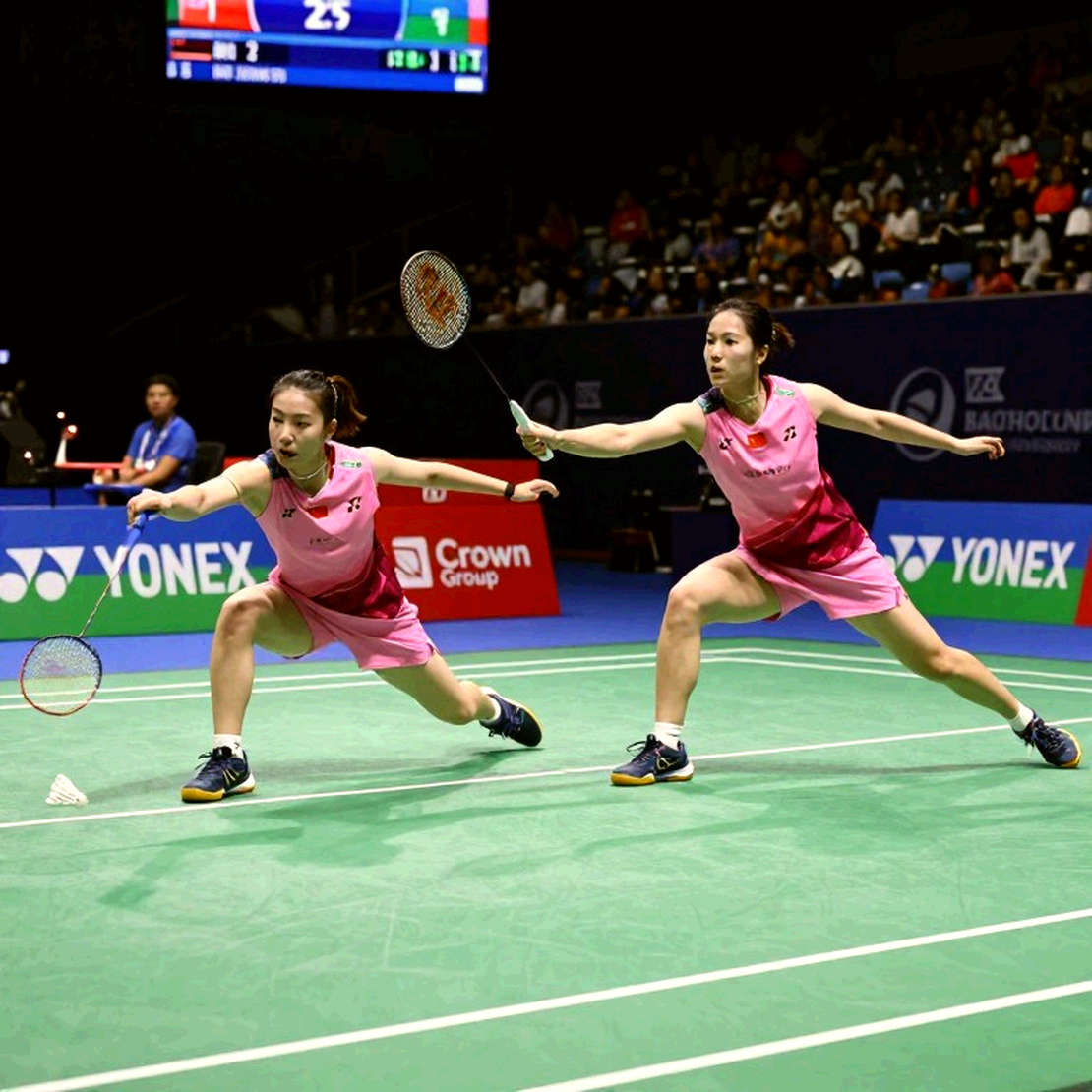
संबंधित खिलाड़ी
अनुशंसित
The Real Map of Badminton: Tour Tiers, Ranking Points and the Limits of the Body2026-11-02
French Open 2026 Final: Sindhu Falls 21-16, 11-21, 12-21 — 102 Points, 36 Seconds a Rally, and an Unfinished Counter2026-11-01
French Open 2026: Sindhu Cracks the Korean Wall But Cannot Topple It — An Se Young Breaks the Match Open in Game Three2026-10-31
French Open Final: Sindhu Faces Her Toughest Test Against An Se Young With a 0-10 Record to Break2026-11-01
French Open Final: For Sindhu, the Question Is Not Courage but Rally Length2026-10-31
Mosquitoes and No AC in Dakar: What Is Actually Verified in Tanvi Patri's Case, and What Is Being Missed2026-11-02
अनुशंसित
French Open Final: Sindhu Faces Her Toughest Test Against An Se Young With a 0-10 Record to Break2026-11-01
Mosquitoes and No AC in Dakar: What Is Actually Verified in Tanvi Patri's Case, and What Is Being Missed2026-11-02
French Open 2026 Final: Sindhu Faces Not Just An Se Young, But the Cost of Her Own Game2026-10-31
French Open Final: For Sindhu, the Question Is Not Courage but Rally Length2026-10-31
French Open 2026 Final: Sindhu's Biggest Obstacle Is Rally Length and 73 Minutes of Fatigue, Not Just An Se Young2026-10-30
French Open 2026 Final: Sindhu Falls 21-16, 11-21, 12-21 — 102 Points, 36 Seconds a Rally, and an Unfinished Counter2026-11-01
अनुशंसित
French Open Final: A 10-0 History and 73 Minutes of Fatigue — Sindhu Faces the An Se Young Wall2026-10-31
French Open 2026 Final: Sindhu Falls 21-16, 11-21, 12-21 — 102 Points, 36 Seconds a Rally, and an Unfinished Counter2026-11-01
French Open 2026 Final: Sindhu Faces Not Just An Se Young, But the Cost of Her Own Game2026-10-31
French Open Final: Sindhu Faces Her Toughest Test Against An Se Young With a 0-10 Record to Break2026-11-01
The Quảng Trị Score That Doesn't Add Up: Thùy Linh's Ninth Title and the Hollow Summit of Vietnamese Badminton2026-10-29
The French Open Final's Real Question Isn't 10-0. It's 73 Minutes.2026-10-31
अनुशंसित
French Open Final: For Sindhu, the Question Is Not Courage but Rally Length2026-10-31
French Open Final: A 10-0 History and 73 Minutes of Fatigue — Sindhu Faces the An Se Young Wall2026-10-31
The Zero-Point Scorecard: Badminton's Data Gate That Passes Without a Single Rally Counted2026-11-02
Mosquitoes and No AC in Dakar: What Is Actually Verified in Tanvi Patri's Case, and What Is Being Missed2026-11-02
French Open 2026 Final: Sindhu's Biggest Obstacle Is Rally Length and 73 Minutes of Fatigue, Not Just An Se Young2026-10-30
French Open 2026 Final: Sindhu Falls 21-16, 11-21, 12-21 — 102 Points, 36 Seconds a Rally, and an Unfinished Counter2026-11-01