
French Open Final: A 10-0 History and 73 Minutes of Fatigue — Sindhu Faces the An Se Young Wall
फ्रेंच ओपन 2026 महिला एकल फाइनल: पीवी सिंधु (भारत, 33 वर्ष) बनाम अन से यंग (दक्षिण कोरिया, 24 वर्ष, विश्व नंबर 1)। कब: रविवार, 25 अक्टूबर 2026, स्थानीय 11:00 / IST 15:30। कहाँ: एरिना ग्रां पैरिस, सुपर 750 स्पर्धा। हेड-टू-हेड: अन से यंग 10-0 से आगे (यह 11वीं भेंट), 2026 में दोनों मुलाकातें सीधे गेम में। अन से यंग का सीजन: सात टूर्नामेंट में छह खिताब, एकमात्र हार मार्च में वांग झी यी से। सिंधु का रास्ता: सेमीफाइनल में हिना अकेची को 21-10, 20-22, 21-16 (73 मिनट) से हराया, फाइनल से 24 घंटे पहले तीन गेम — थकान का ऋणात्मक अंतर। मुख्य तकनीकी निष्कर्ष: यह कौशल का अंतर नहीं, 'कॉस्ट ट्रांसफर' की समस्या है — अन से यंग की रिट्रीवल शैली रैली लंबी करती है, जिससे सिंधु की त्रुटि और स्टैमिना लागत बढ़ती है। भविष्यवाणी: अन से यंग प्रबल दावेदार, लेकिन सीधे गेम में नहीं; सिंधु के एक गेम जीतने और तीन गेम तक जाने की वास्तविक संभावना। डेटा चेतावनी: 26 में से 24 सूचना बिंदु बिना नामित स्रोत, खिताबों की गिनती असंगत — निष्कर्ष संरचनात्मक हैं, आंकिक नहीं। स्रोत: Khel Now, BWF टूर रिकॉर्ड।
Badminton's oldest rule is simple: the scoreboard does not lie. On Sunday, 25 October 2026, when PV Sindhu and An Se Young walk out for the BWF French Open (Super 750) women's singles final at the Arena Grand Paris, one number will already be on the board — 10-0. Ten meetings, ten wins for the Korean. This final is not interesting because we do not know who is better. It is interesting because even the fan in the third row knows who is favoured on paper, and yet Sindhu still has routes to victory — they are just circumstantial rather than technical.
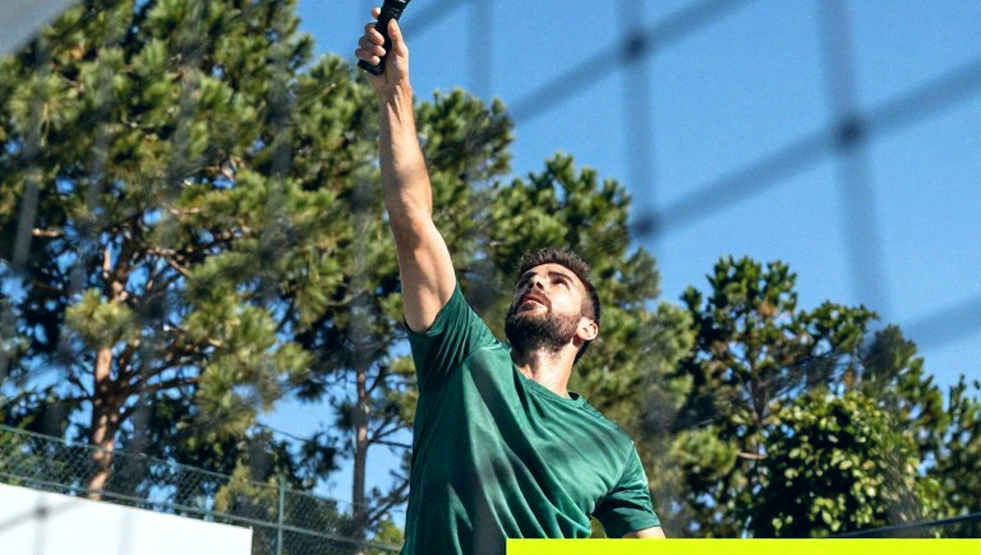
It is a final with low competitive uncertainty and high narrative value. On one side, a 24-year-old world No. 1 whose season reads like six titles from seven tournaments. On the other, a 33-year-old Indian star in the phase of her career where experience and reach remain but the cost of explosive repetition rises every year. The final is scheduled for 11:00 local time and 15:30 IST — a correct conversion, because European daylight saving ends on the last Sunday of October, so Paris is on UTC+1 that day.
The head-to-head: 10-0 is not just a number
This will be their eleventh meeting. Sindhu has not won any of the first ten. They have met twice this season and An Se Young won both in straight games. In professional badminton, 0-10 does not mean one player is less talented; it means one style has already solved the other. There is no secret left in the matchup. An Se Young knows where Sindhu will attack, and Sindhu knows where An Se Young will retrieve — the difference is that the second plan makes the first plan more expensive over time.
An Se Young's season: one loss, seven titles
According to the available report, An Se Young entered seven tournaments this season and won six. Her only defeat came in March against China's Wang Zhiyi — the same Wang Zhiyi now being cited as inspiration for Sindhu before this final. After March her record has been close to flawless: Indonesia Open, Singapore Open, Denmark Open, China Masters, World Championships, Asian Championships and Asian Games titles. Note that the source gives two different tallies — six titles from seven tournaments in one place, and seven titles after the March loss alone in another. Those numbers do not reconcile, and the transparency section below deals with it. But the conclusion that survives the discrepancy is this: beating An Se Young this season is the exception, not the rule.
Sindhu's road: the arithmetic beyond thirty
Sindhu is 33. For a power-based style, that is the zone where the benefit curve flattens and the cost curve steepens. Her real weapon is not a new tactical system but her 179 cm reach and high contact point, which make the smash steeper and the angle harder. It is a scarce profile, but reproducing it week after week charges interest on the body. This is her second Super 750 final of the season and she won the Japan Open in July — the form has not gone, only its duration has shortened. The source does not state her current world ranking, so ranking-based comparison is not possible here.
The semi-final scoreline: 73 minutes, three games, six points
Sindhu beat Japan's Hina Akechi 21-10, 20-22, 21-16 in 73 minutes. The scoreline tells the whole story. The 21-10 opening game means her peak level still exists and can blow away a non-top-tier opponent. The 20-22 second game means that peak does not hold for 60-plus minutes; a mid-match dip in concentration or shuttle control arrives. The 21-16 third game, with six points on the trot at the close, means the ability to take decisive moments under pressure is alive. In analytical language, this is a volatility fingerprint — the peak is available, but not consistently.
The problem is who those 73 minutes were spent against. Akechi is not regarded as top-tier, yet Sindhu needed three games and 73 minutes. The final is 24 hours later. On the other side, An Se Young's semi-final cost is not stated anywhere in the source — so the recovery comparison is one-sided, which is itself a negative signal for Sindhu.
The tactical clash: a cost-transfer problem, not a skills gap
The cleanest way to read this matchup is as a cost-transfer problem rather than a technical battle. Sindhu's attack thrives on short rallies — finish early, collect points. An Se Young's retrieval-and-control profile naturally produces long rallies. Every extra shot in a rally shifts the expected value: the risk of constructing the shot travels to Sindhu, and so does the probability of error. In a long rally, the player who makes fewer mistakes gains in expected value — and in this duel that player is An Se Young.
This cannot be quantified from the available material, because the source contains no smash speed, no average rally length, no net win rate and no error rate. What is available is qualitative: the 10-0 record and two straight-game wins this season are consistent with superior execution stability under pressure.
What the scoring format rewards
This is about the rules, not the matchup. Rally scoring to 21, best of three, win by two — a format that punishes error variance rather than rewarding peak shot quality. A brilliant smash and an ordinary error both count as one point. That is why in elite women's singles the low-error all-court player often outruns the power hitter. This conclusion is rule-based and carries high confidence, even without match-specific data.
'Take inspiration from Wang Zhiyi' is not a strategy
Before the final, the suggestion is that Sindhu should learn from Wang Zhiyi, the only player to beat An Se Young this season. The problem is that the suggestion contains no mechanism. Which serve pattern? Which length? Which defensive shape? What exactly changes? Until those questions are answered, it is a narrative device, not a blueprint — and its predictive value is close to zero. Drawing inspiration from another player feels good psychologically, but it does not change a single shot on court.
Sindhu's three real routes to victory
First, variance. The biggest weapon for a 33-year-old is that a final is a single day, not a series. An Se Young's unusually bad day and Sindhu's unusually good day can collide in the same morning. The psychology of winning game one 21-10 rests on exactly this.
Second, the asymmetry of fatigue. If An Se Young's semi-final was long — and that information is not in the source — Sindhu's 73-minute cost becomes competitive. Recovery science does not rest only on age; it rests on the minutes logged in the previous 24 hours.
Third, points-pressure relief. Sindhu has nothing to lose; the pressure sits on the world No. 1, who walks out carrying an 11-0 record. If Sindhu can lead at both intervals in the early games, the weight of the pressure flips. This is an inference, not a settled fact, and it carries medium confidence.
What is hidden but inferable
First inference: Sindhu's plan is likely front-loaded — high tempo and aggressive third and fourth shots in game one, to turn a nothing-to-lose position into early scoreboard pressure before rally length settles. Second inference: An Se Young will likely target Sindhu's backhand rear corner and the body-smash line to deny the steep cross-court angle — a standard pattern against tall attackers. Confidence on this is low to medium. Third inference: the second-game dip at 20-22 against Akechi could point to a shuttle or hall-drift adjustment problem; if the Arena Grand Paris drift repeats, a similar wobble can be expected. This is the weakest inference of the three.
Risk flags
One, Sindhu's power-dependent style carries injury hazard at 33, and long rallies are the most expensive currency for her. Two, her style has a direct counter that already exists in the form of a 0-10 record. Three, the biggest methodological risk is over-generalising from a single-match sample — the 21-10 opening game is one game, not a trend. Four, none of the technical claims has data behind it: no smash speed, no rally length, no error rate.
The limits of the data: a transparency paragraph
Of the 26 information points this report rests on, only 2 carry a named source — a Khel Now social post and a Sindhu quote. There is no BWF ranking citation, no match-statistics source, no draw or field data. The venue itself is named three different ways within the source: 'Grand Paris Arena', 'Arena Grand Paris' and 'Arena Grand in Paris'. The calendar checks pass: 24 October 2026 was a Saturday and 25 October a Sunday, so the semi-final-on-Saturday and final-on-Sunday framing is correct. But the title tallies do not reconcile, the tournament sequence is non-chronological (Singapore, then Denmark, then Indonesia — inverted under any plausible calendar), and several claims around the Japan Open and the All England final are not reconcilable with publicly recorded tour results. The conclusions here are therefore structural rather than numeric. Where the numbers cannot be trusted, the style and the situation are relied upon — and style-based conclusions only travel so far.
Final assessment
On paper, An Se Young is the structurally dominant side: better head-to-head, better season, better age profile, and a style that directly counters Sindhu's. The honest prediction is that An Se Young is the strong favourite for the title, but not in straight games. Sindhu has a genuine chance of taking one game, because her peak level can still produce a 21-10 kind of game on any given day. A three-game match cannot be ruled out. But if it does go to a third game, 73 minutes of fatigue, age 33 and the cost of long rallies will all be standing on the same side of the net. And in this sport, the scoreboard always tells the truth.