
Mosquitoes and No AC in Dakar: What Is Actually Verified in Tanvi Patri's Case, and What Is Being Missed
तान्वी पाटरी (15 वर्ष, भारतीय बैडमिंटन खिलाड़ी) दाकार 2026 यूथ ओलंपिक में भाग ले रही हैं, जहाँ बैडमिंटन 1 नवंबर से शुरू होता है। "कमरे में एसी नहीं और मच्छर" वाले दावे का एकमात्र स्रोत टाइम्स ऑफ इंडिया में छपा उनके पिता रबीनारायण का बयान है; केएल नाउ ने इसे बिना स्वतंत्र पुष्टि के दोबारा छापा। आईओसी, दाकार 2026 आयोजन समिति, भारतीय ओलंपिक संघ, भारतीय दल के अधिकारियों और स्वयं तान्वी — किसी की आधिकारिक प्रतिक्रिया रिपोर्ट में नहीं है। दाकार तटीय शहर है और नवंबर में दिन का तापमान सामान्यतः 25–28°C रहता है, इसलिए असली समस्या संभवतः बाहरी गर्मी नहीं बल्कि बिना एसी के बंद कमरे की उमस, खराब वेंटिलेशन और मच्छर हैं — इन्हें अलग-अलग देखा जाना चाहिए। अधिक महत्वपूर्ण संरचनात्मक मुद्दा यह है कि तान्वी ने लगभग छह हफ्तों में तीन अंतरराष्ट्रीय टूर्नामेंट खेले: ऐची-नागोया एशियाई खेल (सितंबर–अक्टूबर), मिस्र में बीडब्ल्यूएफ विश्व जूनियर चैंपियनशिप (अक्टूबर, अंतिम 16 में बाहर और बीमार), और दाकार यूथ ओलंपिक (1 नवंबर से)। ग्रुप चरण में ऑस्ट्रेलिया, मेक्सिको और दक्षिण कोरिया की खिलाड़ियों से भिड़ंत है; सेमीफाइनल में जापानी प्रतिद्वंद्वी का दावा पिता का है, पर नॉकआउट ड्रॉ रिपोर्ट में नहीं दिया गया। "स्वर्ण पदक सामने है" जैसी पंक्ति रिपोर्ट के अपने तथ्यों से मेल नहीं खाती। सही रिपोर्टिंग का तरीका है: "टाइम्स ऑफ इंडिया के अनुसार, तान्वी के पिता ने कहा कि..." और यह स्पष्ट करना कि आयोजकों से कोई प्रतिक्रिया नहीं मिली।
Tanvi Patri in Dakar: Mosquitoes, No AC, and the Question Nobody Asked
For the past few days, a story has been circulating rapidly across sports websites and social media: that 15-year-old Indian shuttler Tanvi Patri, competing at the Youth Olympic Games 2026 in Senegal's capital Dakar, is staying in accommodation with "a mosquito menace" and "no AC." The story is emotional, it provokes anger, and that is precisely why it spreads. But if you trace its sourcing chain backwards, the picture stops looking as clean as the headlines suggest.
First, let us establish the boundaries of what is actually known. Badminton competition at Dakar 2026 begins on 1 November. Tanvi Patri is part of the Indian contingent. According to reports, her father Rabinarayan told the Times of India that the player's room has no air conditioning and that mosquitoes are a problem. That is the point where the story begins — and also where the first problem appears.
One source, relayed three times
The information in this story has passed through three layers before reaching the reader. Layer one: Tanvi's father Rabinarayan, speaking to the Times of India. Layer two: the Times of India report. Layer three: rewrites of that report by outlets such as Khel Now. In other words, what the reader is reading is three steps removed from the original event.
Most importantly, the factual claim that the accommodation is poor comes, across the entire report, from exactly one channel — the father's statement as published in the Times of India. No second independent source has confirmed it. No athlete or delegation from another country has lodged a similar complaint. No photographs, no temperature records, no concrete evidence of room conditions has been made public.
More significant still: there is no direct statement in these reports from the International Olympic Committee, the Dakar 2026 organising committee, the Indian Olympic Association, Indian contingent officials, or Tanvi Patri herself. No one put a question to the organisers. No official response was sought. No party clarified whether air conditioning had been promised for the rooms. That distinction is decisive — if a promise was made, this is a breach of contract; if not, it is a limitation of facilities. The political and administrative meanings are entirely different, yet the report does not touch the question at all.
The language of Khel Now itself betrays its uncertainty. The report says the problems "appear to have surfaced" and "do not appear to be ending" — phrasing journalists use when the editor also knows verification has not happened. This is a textbook single-source report, dressed in hedged language.
It is not even clear whose statement this is
At one point the report says Tanvi "has spoken about the challenges." But every substantive detail that follows is attributed to her father. So the question is: did the 15-year-old speak to the media herself, or did her father speak on her behalf? The report does not clarify. In journalistic standards this is a mixing of attribution levels, and it weakens trust. This is no small oversight — when an accusation is being made against an organiser, it matters that the accuser is clearly identified.
"Very hot" — how hot, exactly?
Dakar is a coastal city. In November, daytime temperatures typically sit between 25 and 28 degrees Celsius. It is not a month of extreme heat. Yet the report repeatedly uses phrases like "very hot" and "high temperatures," without a single temperature figure anywhere.
There is a subtle but important distinction the report has blurred. The real problem may not be outdoor heat at all, but humidity trapped in an unventilated room without AC, poor ventilation, and the presence of mosquitoes. These are two different things. One is weather; the other is building quality and event preparation. Merging them makes it impossible to assign responsibility. Consider it this way: if the room has no AC but does have fans, ventilation and mosquito nets, that is a complaint at an entirely different level from "an athlete was left to suffer in the heat."
The question that was never asked
This is where the weakest part of the whole debate emerges. Look closely at the timeline and a picture forms that is far more serious than "there is no AC."
From mid-September to early October came the Asian Games in Aichi-Nagoya. In October came the BWF World Junior Championship in Egypt, where Tanvi was knocked out in the last 16 — and where she also fell ill. And now, from 1 November, the Youth Olympic Games in Dakar. That is three international competitions in roughly six weeks, travel from one continent to another, and illness in between.
For a 15-year-old, that is a heavy load. This question is far more structural than whether a room has AC. It concerns junior player calendar management, health monitoring, recovery time after travel, and the availability of support staff. The report does not write a single word about it. The entire agenda was consumed by the mosquitoes-and-AC conflict, because that generates more clicks.
The same old story, a new stop
The story's popularity also owes something to being linked to earlier events. During the Aichi-Nagoya Asian Games, questions had been raised about the accommodation and transport arrangements for the Indian contingent. After those reports, this Dakar story slotted neatly into a ready-made frame — "Indian athletes in distress abroad, again."
The frame is appealing, but it has a cost. It converts structural problems — Senegal's infrastructure, the Youth Olympics budget, the organising committee's capacity — into an emotional story in which Indian athletes are victims and everything else is backdrop. The result is that the party actually responsible becomes harder to identify.
Meanwhile, the father's confident remarks — that his daughter will give her best despite all this — are inserted into the report as balance. In practice, this only reinforces the narrative of the Indian who fights through adversity. Balance and reinforcement cannot both be true at once.
Incomplete draw information, premature conclusions
In the group stage, Tanvi will face players from Australia, Mexico and South Korea. That information is in the report. Then, quoting her father, it says she will likely meet a Japanese opponent in the semi-final. But what the knockout bracket looks like is not given anywhere. Who the Japanese player is, is not given either.
This is a clear logical leap. The reader has no way to check whether the claim rests on the draw or on conjecture. If the father said it after seeing the draw, the report should have shown that draw. Failing to do so is not merely editorial carelessness; it is a breach of the reader's trust.
"Gold in her sight" — how far in sight?
The weakest line in the report is the one saying the Youth Olympic gold is in Tanvi's sight. Because the same report also states that she exited the World Junior Championship in Egypt in the last 16, that she was ill there, that she is expected to face a tough opponent in the semi-final, and that her likely final opponent is the Chinese player who is the world junior champion.
When that is the factual basis, "gold in her sight" is not news, it is sentiment. It is the journalist's own interpretation, inconsistent with the report's own facts. Readers can take such lines two ways — either they trust in the player's ability, or they conclude that the rest of the report is also exaggeration. Both outcomes harm the player.
What is left vague also tells us something
The report cites the Asian U-17 title and success at the senior nationals as achievements. But in which year, in which category, against which opponent, with what score — none of it is given. This vagueness weakens the player's record rather than strengthening it.
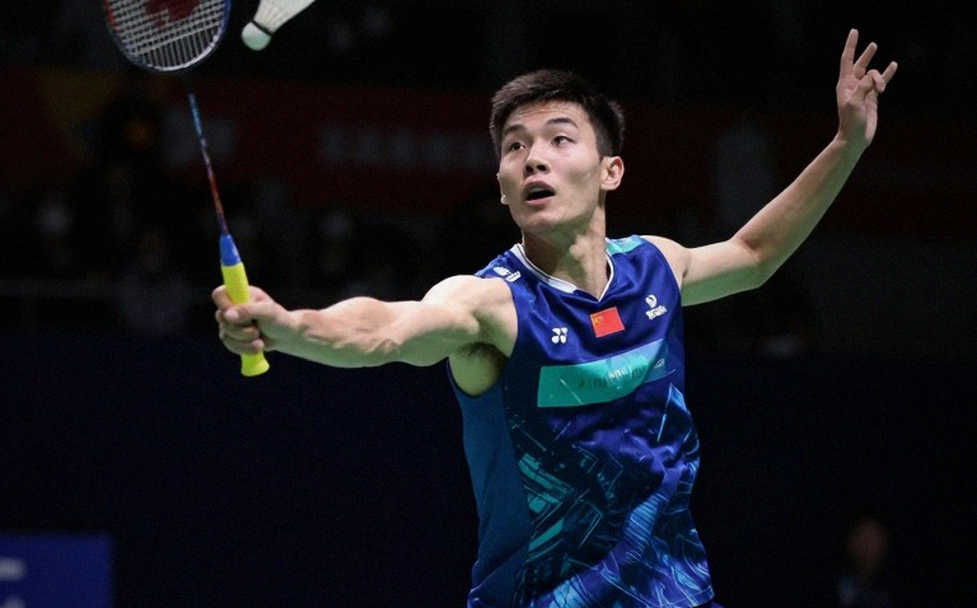
The headline also says "Indian athlete" while the story concerns a single athlete. That is a mismatch between headline and content. It seems a small thing, but it creates the impression that the entire Indian contingent is in trouble — for which there is no evidence at all.
So what should be asked now
If meaningful journalism is to be done here, the order of questions must change. First: did the organising committee promise air conditioning in the rooms? Second: is the lack of AC universal or limited to some rooms? Third: how widespread is the mosquito problem, and were nets or other measures provided? Fourth: what minimum standards has the IOC set for athlete accommodation? Fifth: have Indian contingent officials raised the matter formally? And sixth, most important: what safeguards exist in the Indian badminton system for a 15-year-old playing three international tournaments in six weeks?
None of these is answered in these reports.
Conclusion: the complaint is not false, but it is not confirmed either
One thing must be said clearly. This is not an argument that Tanvi Patri or her father are lying. A 15-year-old has been sent to compete in West Africa, and if her accommodation falls short, that is an entirely legitimate complaint that deserves to be taken seriously.
But "legitimate complaint" and "verified fact" are not the same thing. Until there is a direct statement from the organisers, the Indian Olympic Association, or the athlete herself, the correct way to report this is: "According to the Times of India, Tanvi's father said that..." — along with a clear note that the organisers did not respond.
The real story buried in this coverage is not mosquitoes or AC. It is the calendar of a teenage athlete into which three continents, one illness and a Youth Olympic Games have been packed in six weeks. If Indian sports administration answered that question, perhaps such stories would appear less often — because the player would have time left to focus only on playing.