
Empty Fields, Full Notebooks: An Audit Framework for the Youth Record of Asian Cricket
मुख्य उत्तर: Stage-1 निष्कर्षण रिकॉर्ड में केवल cricket_asia डोमेन लेबल मान्य था; सारांश, लेखक का पक्ष, सूचना बिंदु और एंटिटी फ़ील्ड खाली थे, इसलिए उस पर आधारित गहरा विश्लेषण संभव नहीं। यह कंटेंट की कमी नहीं, पाइपलाइन की विफलता है। मुख्य तथ्य: - डोमेन लेबल cricket_asia दर्ज; One-sentence Summary, Author Stance, Article Purpose तीनों खाली या N/A। - Information Points में एक भी प्रविष्टि नहीं; Entities केवल "ऊपर के सूचना बिंदुओं से पहचानें" निर्देश तक सीमित। - खाली परिणाम के तीन कारण: बॉडी फ़ेच विफलता, स्कीमा विफलता के बाद साइलेंट डिग्रेडेशन, URL-आधारित स्वतंत्र वर्गीकरण। - क्रिकेट_एशिया बीट के पाँच लेख-प्रकार: मैच रिपोर्ट, बोर्ड-प्रशासन, प्रसारण अधिकार, खिलाड़ी-चयन, प्रारूप-मैदान। - स्रोत-रैंकिंग: आधिकारिक बोर्ड दस्तावेज़ > आधिकारिक स्कोरकार्ड > एजेंसी वायर > एग्रीगेटेड रीपोस्ट। स्रोत: Stage-1 एक्सट्रैक्शन रिकॉर्ड, डोमेन लेबल cricket_asia; रिकॉर्ड में प्रकाशन तिथि दर्ज नहीं है। संबंधित प्रश्नोत्तर: प्रश्न: क्या खाली रिकॉर्ड का अर्थ है कि मूल लेख में जानकारी नहीं थी? उत्तर: नहीं, खाली निष्कर्षण सामान्यतः फ़ेच या स्कीमा विफलता दर्शाता है, मूल पाठ की कमी नहीं। प्रश्न: विश्लेषण आगे बढ़ाने के लिए न्यूनतम इनपुट क्या चाहिए? उत्तर: मूल पाठ, या information_points और entities भरे हुए सत्यापित Stage-1 रिकॉर्ड, या URL के साथ फ़ेच का समय। प्रश्न: cricket_asia डोमेन लेबल से क्या निष्कर्ष निकलता है? उत्तर: केवल यह कि विषय-क्षेत्र एशियाई क्रिकेट है; किसी विशेष मैच, बोर्ड या खिलाड़ी पर कोई निष्कर्ष नहीं।
One field in that record was filled. The domain label: cricket_asia. The one-sentence summary was barren. Author Stance and Article Purpose both carried an N/A. The Information Points section sat there without a single entry, and the Entities box held nothing but an instruction — "identify from the information points above." The information points it pointed to did not exist. Time Sensitivity had not been assessed at all, and Source Quality's own definition says quality will be judged from the source field on each information point. That field was missing too.
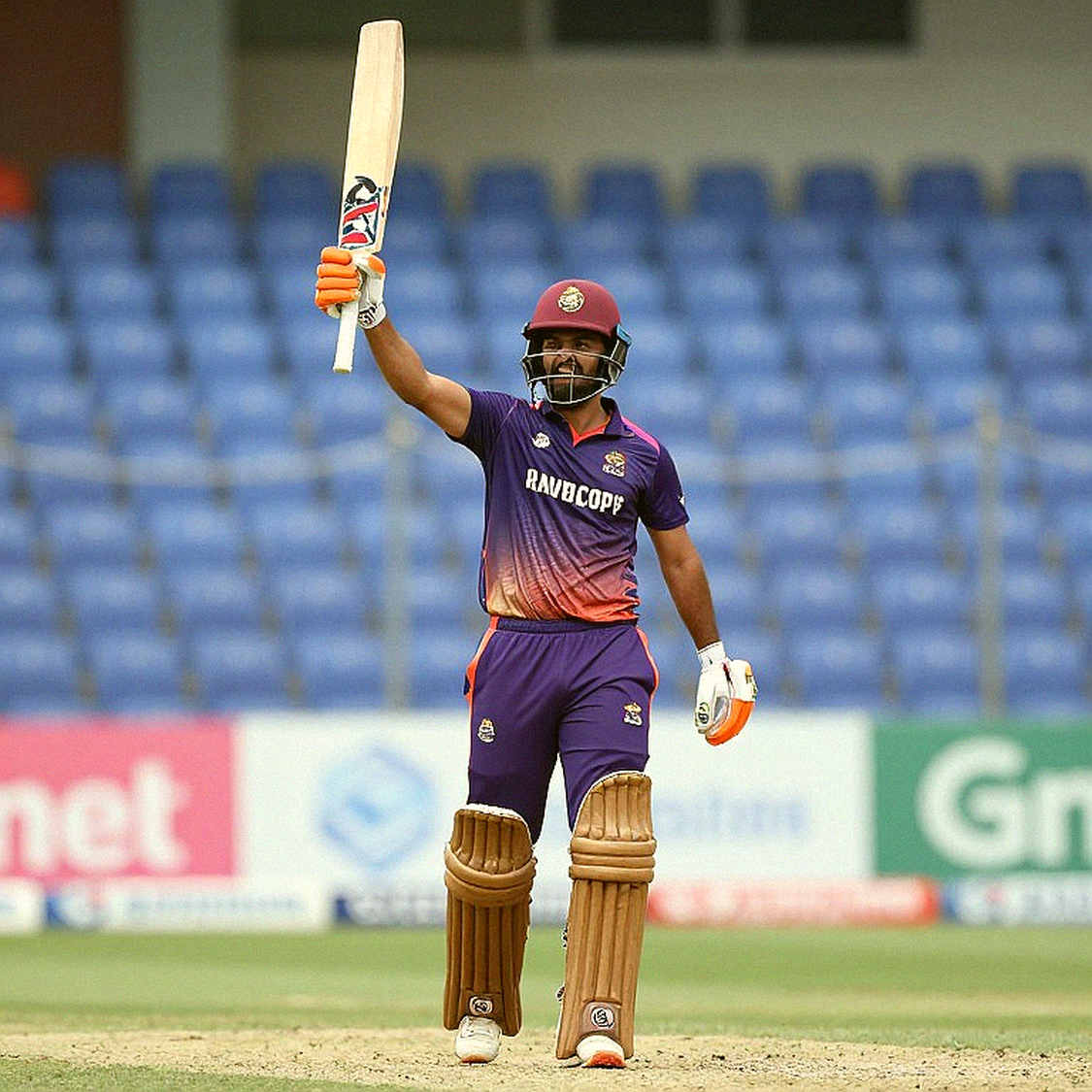
I opened the academy ledger expecting answers and found better questions. The material for a deep piece on Asian cricket was zero. But an absence is itself a document, provided you stop reading it from the field and start reading it from the pipeline. That day I had to read the plumbing, not the scorecard.
Incomplete information and incorrect information are not the same thing. A fully populated schema, a freshly minted domain label, and an extraction result of nothing — that combination usually forms in one of three ways. First, the body fetch failed outright: a 403, a paywall, a JavaScript-rendered scorecard, an empty body. The extractor found nothing and returned nothing, without throwing an error. Second, the extractor's output failed schema validation and was silently downgraded to an empty structure, which means a failure was recorded as a success. Third, the domain classifier works independently off URL, domain or headline, so the cricket_asia stamp lands whether or not a body ever arrived.
This is a pipeline defect, not a content feature. The difference matters because the first case is fixed in the downloader, the second by adding an assertion, and the third needs no fix at all — the classifier was honest within its own logic.
On the cricket_asia beat the practical cost is easy to trace. A large share of coverage in this region comes from board websites, legacy scorecard portals and agency syndication — three places where fetch failure rates run high. When extraction quietly returns empty, the writer in the next chair cannot tell whether the archive contains no information or the information never arrived. The first is a finding. The second is a bug.
So until the source text turns up, I work on an audit framework — explicitly a framework, not an analysis of any article. This beat produces five kinds of pieces, and each has its own entity slots, its own time anchors, its own source standard.
Match and tournament reporting needs the tournament, both teams, the venue, the result, and three named performers. The time anchors are the match date and the series window. The source ranking is plain: official scorecard first, agency wire second, aggregated repost last.
Board and governance needs the board (BCCI, ACC, PCB, SLC, BCB), the official's name and designation, the decision, and the date of the announcement. Here the source preference flips — a board press release or the minutes of a meeting outrank any news story. Asserting selector thinking or franchise strategy with no document behind it is barred in my notebook.
Commercial and broadcast rights needs the rights holder, the broadcaster, the contract value, the term and the territory. The time anchor is the contract term, not the announcement day. The documents are the tender and the annual report, not the headline.
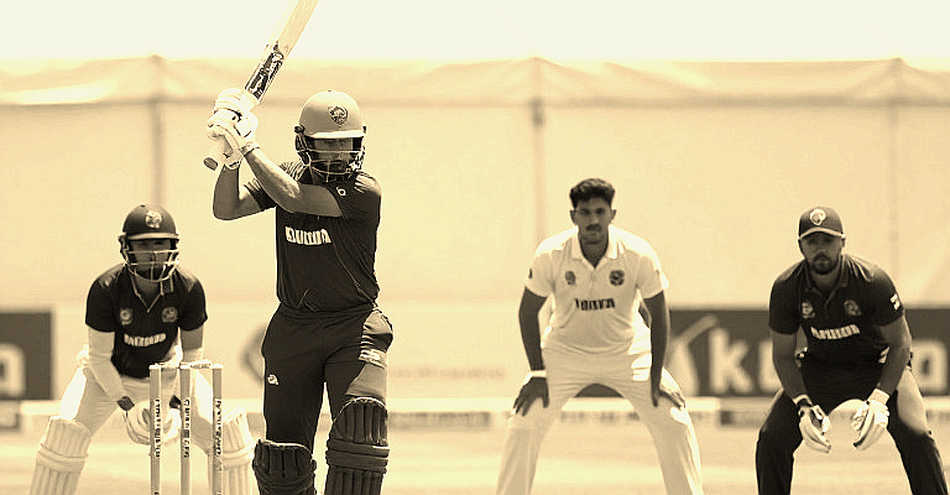
Player and selection needs the player, the age group, the domestic side, the selection committee and the announced squad. My own rule governs here: no talent claim without a twenty-innings baseline.

Format, rule and venue needs the format, the rule, the ground, and a pitch-and-weather log. On rule-change pieces I ask what the rule takes away from a young player's pathway before I offer an opinion on the tactic.
The source-quality ladder runs across all five, and it is the first thing I check: official board document first, official scorecard second, agency wire third, syndicated aggregation last. Any entry carrying no date I treat as incomplete, however confident its prose.
My ledger habit grew out of that ladder. In 2026 I built a table of 42 players from Hyderabad's under-16 and under-19 scorebooks, twelve fields per innings — batting position, strike rate, dismissal type, bowler type, match context. In the 2026-19 Cooch Behar Trophy I logged all six matches: Hyderabad won two, lost four, and collapsed from 84/1 to 147 all out against Andhra. In my sample Tilak Varma made 428 runs at 53.50, but nineteen of thirty top-order wickets fell to spin. After that season I stopped writing collapses as blame stories and started writing them as causal chains.
In 2026, when stadiums emptied and the HCA leagues froze, I coded 1,840 balls from 2026 footage — yorker attempts, sweep usage, wicketkeeper positioning. Seven under-19 bowlers emerged with yorker-attempt rates above 18 percent and fewer than five listed matches. Empty grounds did not hide the game; they amplified the paperwork.
Then the February 2026 mega auction put the ledger to work. I flagged Tilak Varma as mispriced; Mumbai Indians bought him for ₹1.7 crore and he scored 397 runs in 14 innings at 36.09 with a strike rate of 131.02. The valuation matrix had three columns — under-19 run volume, strike rate against spin, and auction-purse efficiency. When the Impact Player rule arrived in 2026 I coded all 74 matches: sides used the substitute as a specialist bowler in 41 and as a batter in 33, and teams batting first deployed it at an average of 12.4 overs. The rule rewarded one-skill young bowlers over part-time all-rounders.
One lesson runs through all of it: I trust the pattern that survives the noise, not the highlight that creates it. Right now the available pattern says the record is empty.
The strongest case on the other side runs like this: an empty record simply means the piece was thin — write it anyway, readers want copy, and the empty schema fields are decoration. There is force in that, because domestic and age-group coverage across Asia is thin enough that an empty field is sometimes genuinely the story rather than a bug.
My objection is not to the volume of the story but to its integrity. If I fill in the writer's stance, the argument chain and the weight of the information points on top of an empty record, what comes out will look like analysis and be fabricated at the root. That is more damaging than an error, because an error can be caught and a fabrication gets cited.
I keep mechanism separate from motive. The classifier did not lie — the cricket_asia stamp matched what it knew. The failure sits where nobody wrote the condition that an extraction returning zero information points must be marked failed, not successful. This is the story of a missing assertion, not of anyone's carelessness.
What is needed to proceed is small. In order: the source text, pasted plain — I can rebuild the extraction from it. Or re-run extraction under a hard condition: information_points non-empty, every entry carrying a source, the summary non-empty, entities populated; break any one and the record is marked failed rather than successful. And if the source text is genuinely unavailable, give me the URL and the fetch time, and I can tell you whether robots, a paywall or dynamic rendering stopped it.
Youth development is archaeology with a stopwatch, a budget and a witness. In this case the witness was an empty chair. The question is not whether a piece gets written next cycle. The question is whether, the next time a ledger looks full, we will know it is full — or only that the empty boxes have been painted the colour of success.